In my town a hundred plus years ago, the entertainment was watching the men wrangle the floating trees into the mill pond. The trees didn't care if they arrived under less than ideal conditions. The wranglers had to turn a felled tree through a 90 degree turn into the mill pond as it it was flowing downstream. If they missed, then they were literal logjam entertainment.
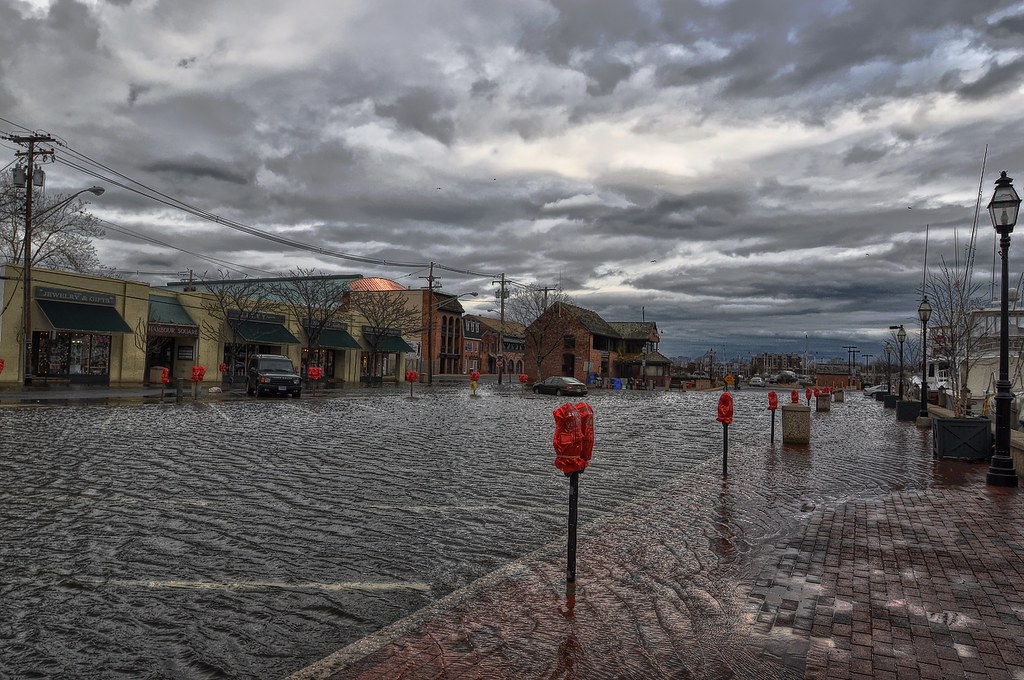
King Tides are the highest tides of the year. When both the moon and the distance to the sun are at a particular alignment, the tides are at their greatest magnitude. Without winds or storm surge, this still leads to flooding. In Miami Beach, king tides arrival dates are well known and life adjusts. Here is Annapolis Maryland.
The University of Washington sees an educational opportunity in the Puget Sound. Maybe, the attendees are seeking entertainment or affirmation or connection with like-minded people. Tourists like to see something before it's gone forever. I see an opportunity to spread the word about real events.
https://wsg.washington.edu/community-outreach/hazard-resilience-and-climate-adaptation/king-tides/program/
Here are two more in the San Francisco Bay. I imagine there are many more around the world.
https://www.exploratorium.edu/visit/calendar/king-tide-walk-january-2019
https://www.eventbrite.com/e/tidewaters-rising-a-king-tide-hike-tickets-53923121508
Importantly, all of these events demonstrate the baseline impact of changes.
wagees - when humans change because the water changes
Saturday, January 12, 2019
Friday, January 11, 2019
Flooding when it's not raining
The impact to locals is always familiar. It may not show up on sea level measurements or reported by the local National Weather Service bureau but the locals know.
https://www.nbcnews.com/mach/news/east-coast-sea-level-rise-high-tides-flooding-ncna957241
In this particular article, three things caught my eye. First, I used to live where most of the article focuses, Virginia Beach, Virginia. I don't remember a single flooding when it wasn't raining. Even then, the flooding was just rainfall. Now we get
"In southern Virginia Beach, Virginia, a bit of rain and a strong wind from the south is enough to bring water from the Back Bay onto farmland. And in Norfolk’s Hague neighborhood, high tides spill water from the Elizabeth Creek into the streets, making roads impassable, damaging cars and snarling traffic. Flooding has become so common that Norfolk resident Kiquanda Baker says residents will cancel plans if rain is in the forecast. “It's becoming where people have to plan around water,” Baker said. Those in the Chesapeake Bay area say that flooding has become an increasingly persistent problem in the last two decades. Scientists say that things will only get worse, as the area is ground zero for rising seas on the East Coast."
Second, the Chesapeake Bay area is the type of place where water gets into people's lives more and more: low elevation, storm facing, full of estuaries and people. Washington DC, Baltimore MD and the Norfolk Naval Base are connected to the Chesapeake.
Third, this is not some future event.
"Melissa Stillman’s home in Virginia Beach's Bird Neck neighborhood sits 6 feet above sea level. Homes in her area have drainage ditches that feed rainwater to a nearby creek. During the rainy summer months, streets around the neighborhood flood up to four times a month, Stillman said. And flood waters are getting closer to her home than ever. "This is the first year that just during a heavy rainstorm the water was backing up in our yard, getting close to our house," Stillman said. In Pungo, a neighborhood in southern Virginia Beach, locals are wary of winds. Pungo is one of several neighborhoods in the area that suffer from flooding when winds come in from the south, blowing water from the Back Bay into streets and onto properties."
Frogs jump out of boiling water. Frogs also leave water if the temperature is low and slowly increased no matter what the myths say. People are noticing the changes. Humans being social creatures of habit may not leave the water just yet but they do know what's up.
https://www.nbcnews.com/mach/news/east-coast-sea-level-rise-high-tides-flooding-ncna957241
In this particular article, three things caught my eye. First, I used to live where most of the article focuses, Virginia Beach, Virginia. I don't remember a single flooding when it wasn't raining. Even then, the flooding was just rainfall. Now we get
"In southern Virginia Beach, Virginia, a bit of rain and a strong wind from the south is enough to bring water from the Back Bay onto farmland. And in Norfolk’s Hague neighborhood, high tides spill water from the Elizabeth Creek into the streets, making roads impassable, damaging cars and snarling traffic. Flooding has become so common that Norfolk resident Kiquanda Baker says residents will cancel plans if rain is in the forecast. “It's becoming where people have to plan around water,” Baker said. Those in the Chesapeake Bay area say that flooding has become an increasingly persistent problem in the last two decades. Scientists say that things will only get worse, as the area is ground zero for rising seas on the East Coast."
Second, the Chesapeake Bay area is the type of place where water gets into people's lives more and more: low elevation, storm facing, full of estuaries and people. Washington DC, Baltimore MD and the Norfolk Naval Base are connected to the Chesapeake.
Third, this is not some future event.
"Melissa Stillman’s home in Virginia Beach's Bird Neck neighborhood sits 6 feet above sea level. Homes in her area have drainage ditches that feed rainwater to a nearby creek. During the rainy summer months, streets around the neighborhood flood up to four times a month, Stillman said. And flood waters are getting closer to her home than ever. "This is the first year that just during a heavy rainstorm the water was backing up in our yard, getting close to our house," Stillman said. In Pungo, a neighborhood in southern Virginia Beach, locals are wary of winds. Pungo is one of several neighborhoods in the area that suffer from flooding when winds come in from the south, blowing water from the Back Bay into streets and onto properties."
Frogs jump out of boiling water. Frogs also leave water if the temperature is low and slowly increased no matter what the myths say. People are noticing the changes. Humans being social creatures of habit may not leave the water just yet but they do know what's up.
Subscribe to:
Comments (Atom)

